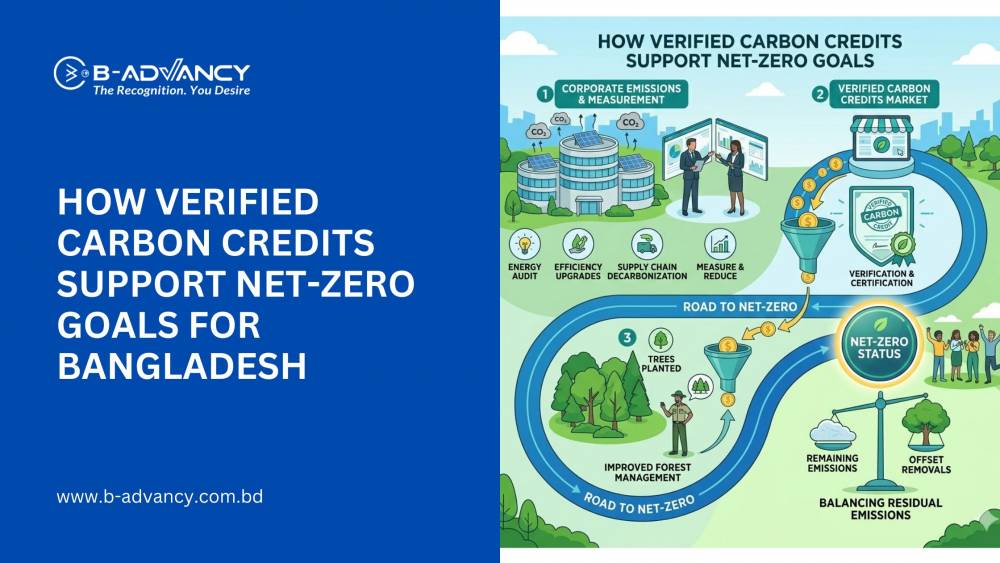
As Bangladesh continues its sustainable development journey, one of the biggest environmental challenges it faces is balancing economic growth with climate responsibility. With rising emissions from energy, transportation, industry, and urbanization, achieving net-zero carbon emissions is no longer optional — it’s essential. Fortunately, verified carbon credits are emerging as a practical tool to help Bangladesh make real progress toward its net-zero goals.
What Are Verified Carbon Credits?
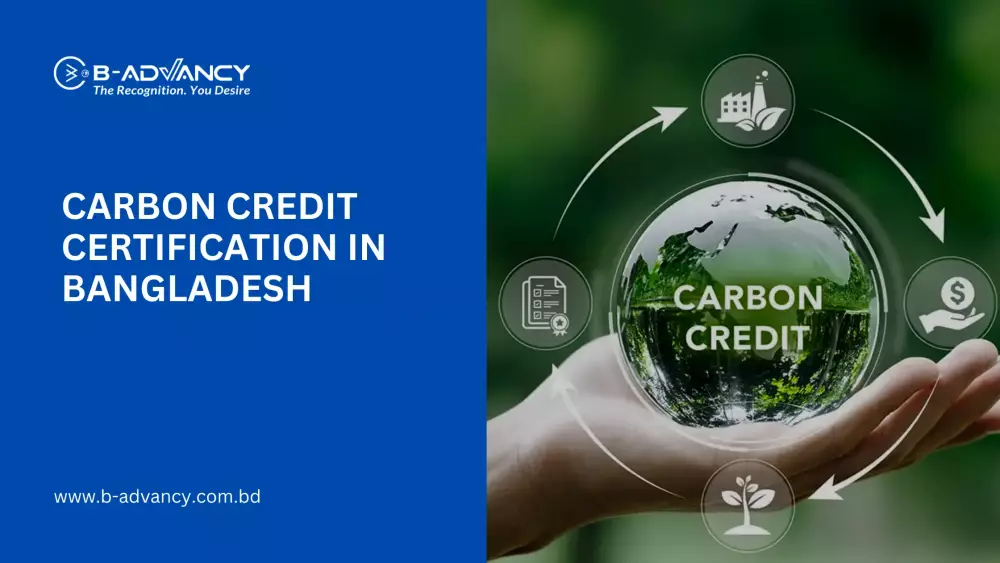
Verified carbon credits are measurable, quantifiable emission reductions generated by projects that cut or remove greenhouse gases (GHGs) from the atmosphere. Each credit typically represents one metric ton of CO₂ equivalent (tCO₂e) avoided or removed.
What makes them verified is an independent third-party audit that ensures the reduction is:
Real – genuinely reduces emissions
Additional – goes beyond what would have happened anyway
Permanent – sustained over time
Avoids double counting – unique and tracked transparently
These credits are usually traded in voluntary carbon markets and play a key role in corporate and national climate strategies.
Why Carbon Credits Matter for Bangladesh
Bangladesh is especially vulnerable to climate change. With its low-lying geography, frequent cyclones, and densely populated coastal areas, climate impacts are both immediate and severe. Yet the country has shown leadership by committing to the Paris Agreement and national efforts such as the Bangladesh Climate Change Strategy and Action Plan (BCCSAP).
Here’s how verified carbon credits help support these ambitions:
1. Catalyzing Climate Finance for Green Projects
Large-scale climate investment is essential for Bangladesh’s energy transition, sustainable agriculture, and infrastructure adaptation. Many projects struggle to attract finance due to perceived risk or low return.
How carbon credits help:
-
Generate additional revenue streams for projects
-
Attract private sector capital
-
De-risk investments in renewable energy, waste-to-energy, forestry, and methane capture
For example, a biomass power plant that sells carbon credits can improve financial viability and scale up operations faster.
2. Supporting Renewable Energy Growth
Bangladesh aims to increase its renewable energy share to reduce dependency on fossil fuels. Solar, wind, and biogas projects that reduce carbon emissions are eligible to earn verified carbon credits.
Benefits:
-
Accelerates deployment of clean energy
-
Helps manage power sector finance by monetizing emission reductions
-
Spurs innovation and private investment
This is especially relevant for distributed renewable solutions in rural and off-grid regions.
3. Encouraging Sustainable Land Use and Forestry
Forests and wetlands store carbon naturally, and protecting or restoring these ecosystems generates carbon removal credits.
Bangladesh has significant potential in:
-
Mangrove restoration (like the Sundarbans)
-
Agroforestry systems
-
Peatland conservation
Investments in these ecosystems provide carbon credits and deliver co-benefits like:
-
Biodiversity conservation
-
Flood protection
-
Sustainable livelihoods for local communities
4. Linking Private Sector Commitments to National Goals
Many Bangladeshi businesses—especially in textiles, manufacturing, and technology—are committing to net-zero strategies to attract global buyers and investors.
Verified carbon credits offer:
-
A flexible tool to offset unavoidable emissions
-
Credible metrics for corporate climate reporting
-
Alignment with international standards like the Carbon Offsetting and Reduction Scheme for International Aviation (CORSIA) and Science-Based Targets
This fosters a climate-responsible business ecosystem that supports national commitments.
5. Driving Innovation and Green Job Creation
Carbon credit projects often require new technologies, monitoring systems, and verification services. This stimulates:
✔ Green technology adoption
✔ Skills development in MRV (Measurement, Reporting, Verification) systems
✔ New jobs in renewable energy, forestry, and sustainability services
Building local expertise also strengthens Bangladesh’s position in global carbon markets.
Challenges & Considerations
While the benefits are real, there are some challenges:
-
Ensuring quality and credibility – Avoiding poor-quality credits that don’t deliver real emission reductions
-
Regulatory alignment – Creating frameworks that recognize carbon markets within national climate policy
-
Capacity building – Training local developers, validators, and policy makers
Strong governance, transparency, and stakeholder engagement are essential.
Looking Ahead: Scaling Carbon Markets in Bangladesh
To fully harness verified carbon credits, Bangladesh can focus on:
-
Setting national carbon pricing frameworks
-
Integrating carbon markets into climate policies
-
Encouraging private sector participation
-
Building registry systems for transparent credit tracking
With these in place, carbon credits can become a reliable tool for climate finance and sustainable development.
Conclusion:
Verified carbon credits are more than a financing mechanism — they’re a bridge connecting global climate action with on-the-ground projects that reduce emissions and bolster resilience.
For Bangladesh, they provide:
-
A mechanism to fund green transitions
-
A way for businesses to contribute to climate goals
-
A platform for community-based climate action
By leveraging high-quality carbon credits strategically, Bangladesh can accelerate its transition to a low-carbon, climate-resilient future — and become a model for climate action in South Asia.